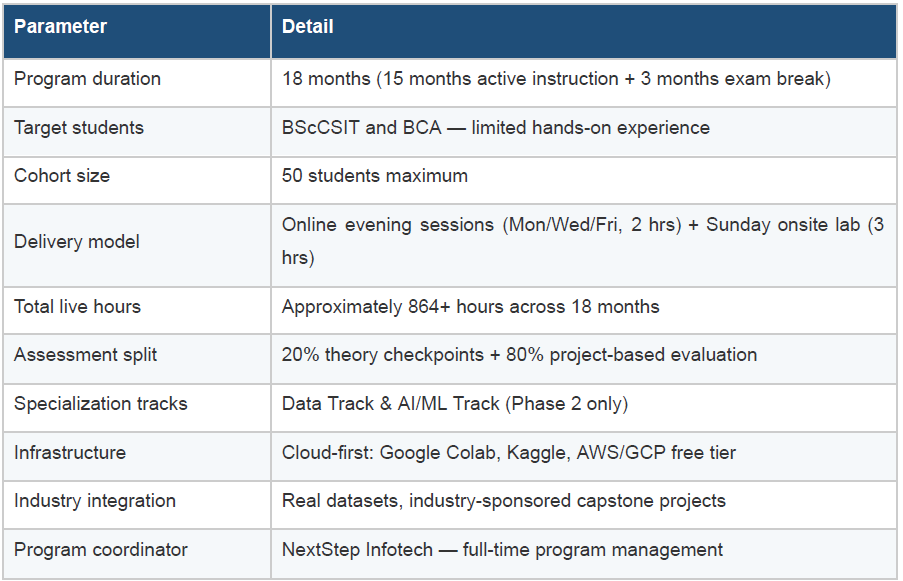
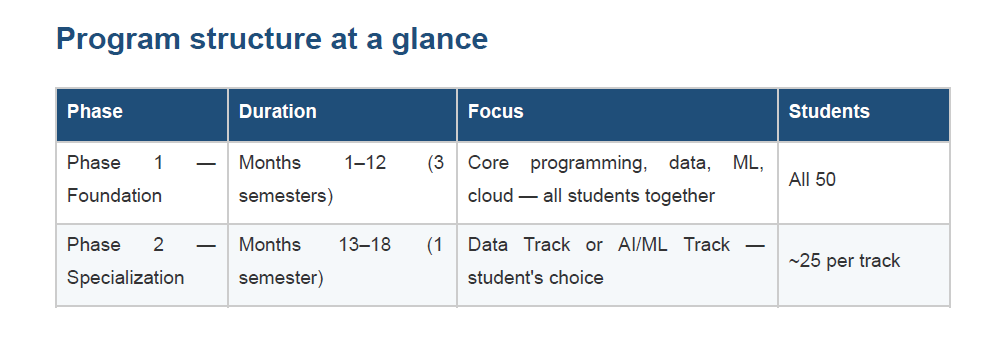
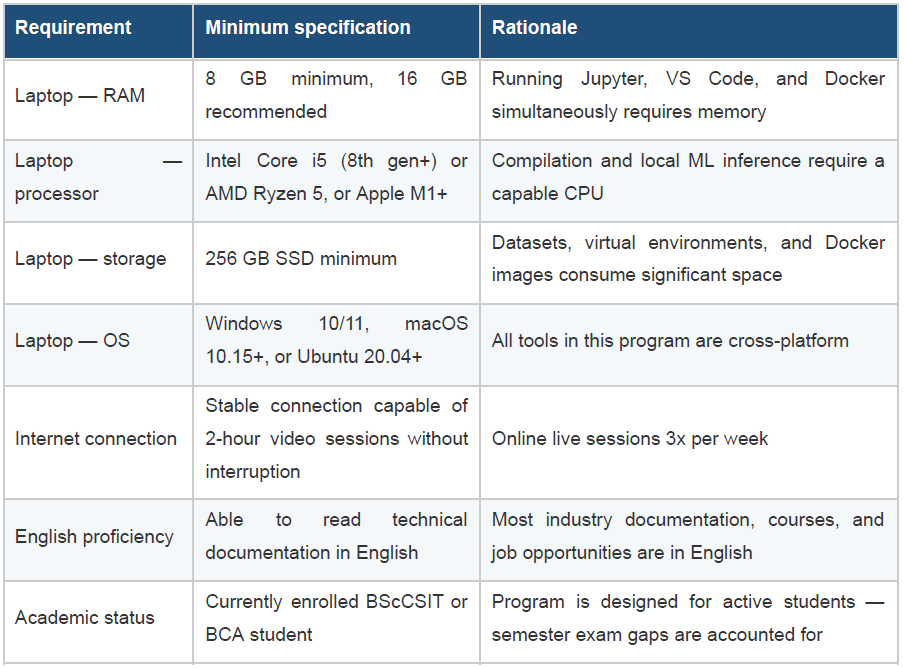
All 50 students follow the same curriculum during Phase 1. The goal is to build a strong, practical foundation across programming, data handling, statistics, machine learning, and cloud tools — the skills that are relevant regardless of which specialization track a student ultimately chooses.
SEMESTER 1 | Months 1–5 | Programming & Data Foundations
Semester 1 focuses on building the programming and data handling skills that every subsequent module depends on. Students with no prior Python experience will be brought to a professional working level. All work is done on cloud platforms from day one.
-
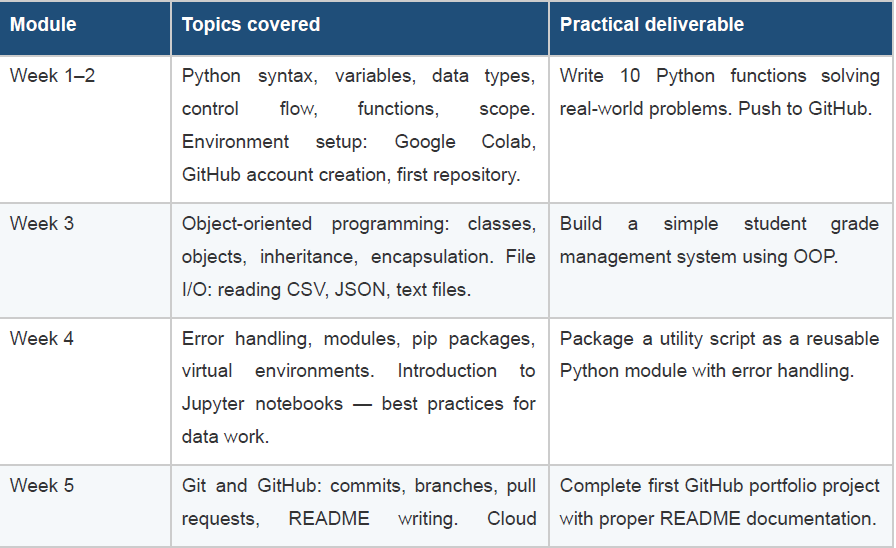
Module 1 — Python programming foundations
(Duration: 5 weeks | Instructor: Industry practitioner (Python/backend developer)

-
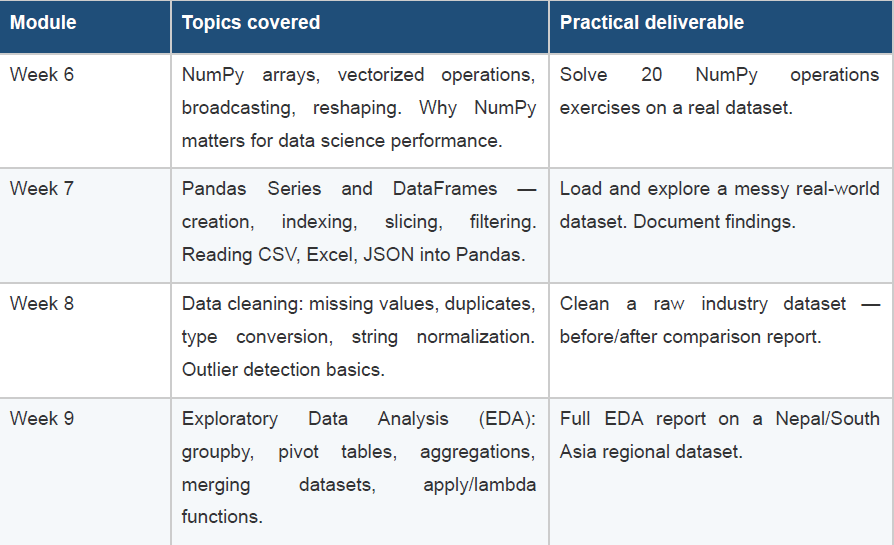
Module 2 — Data fundamentals with NumPy & Pandas
(Duration: 4 weeks | Instructor: Data engineer or senior data analyst)
-
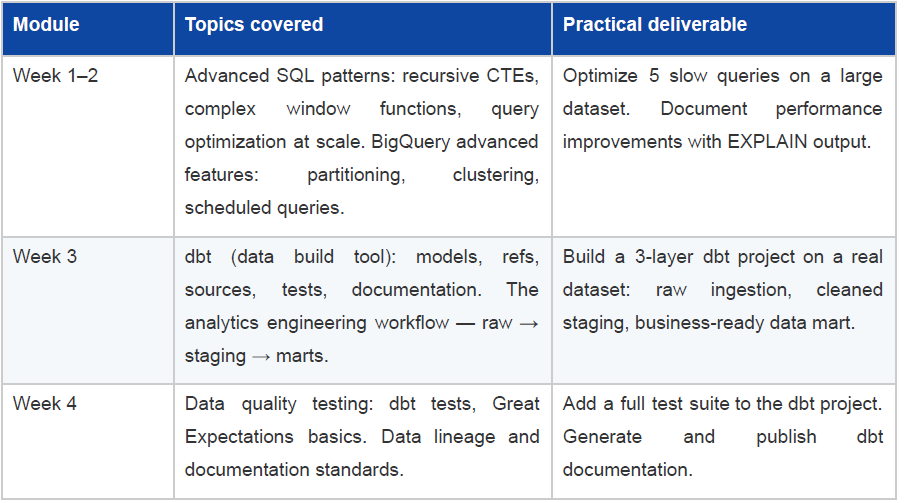
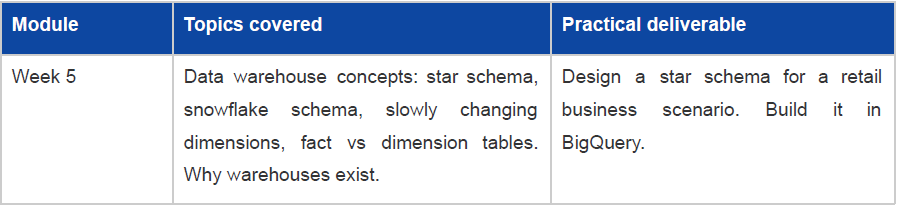
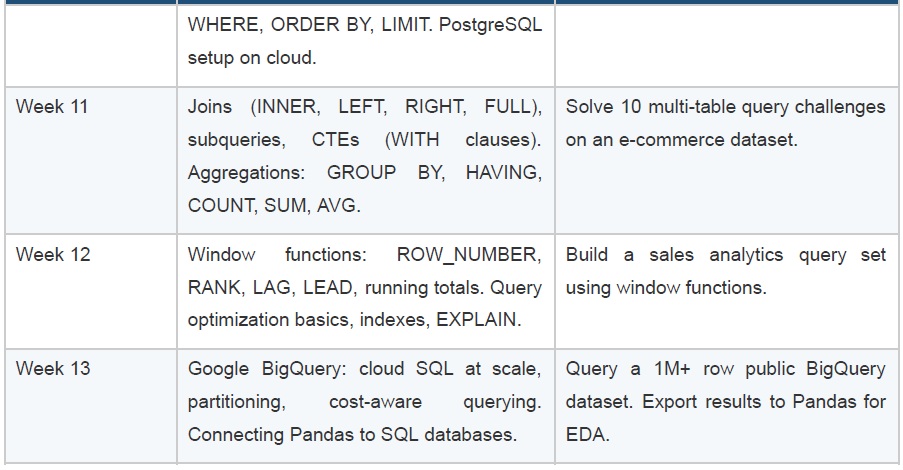
Module 3 — SQL & databases
(Duration: 4 weeks | Instructor: Database administrator or data engineer)

-
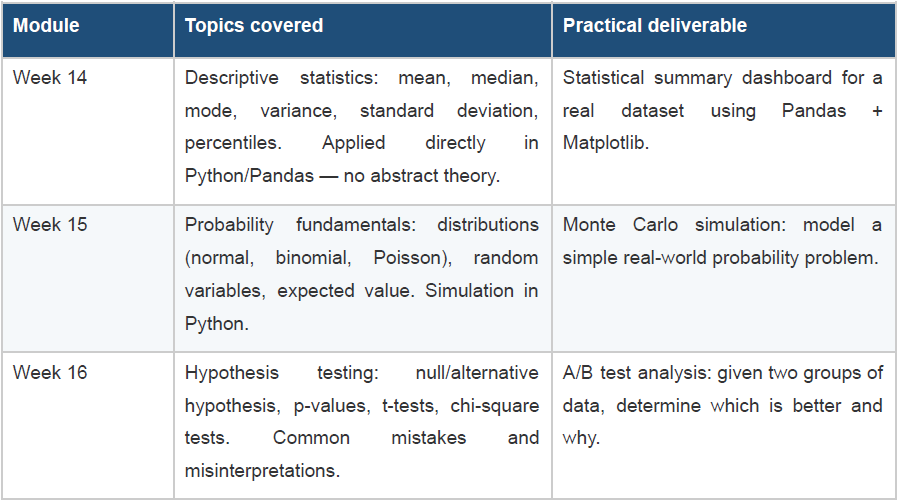
Module 4 — Statistics for data science
(Duration: 4 weeks | Instructor: Data scientist with applied statistics background)

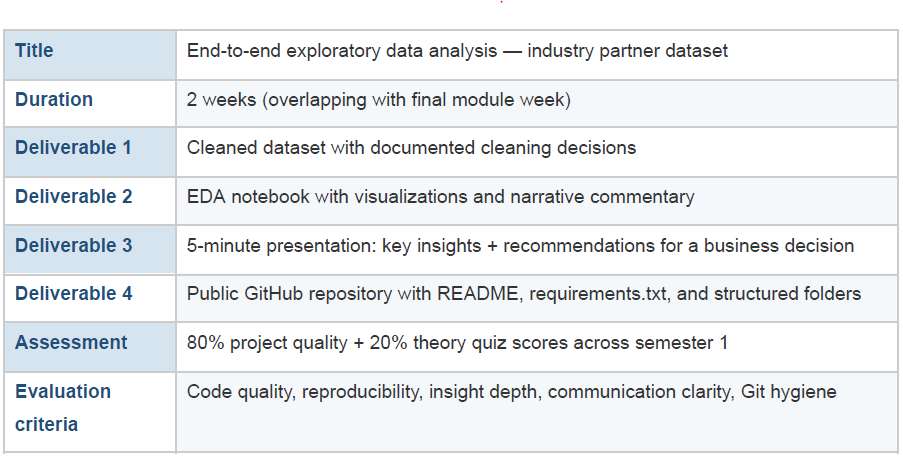
Semester 1 project
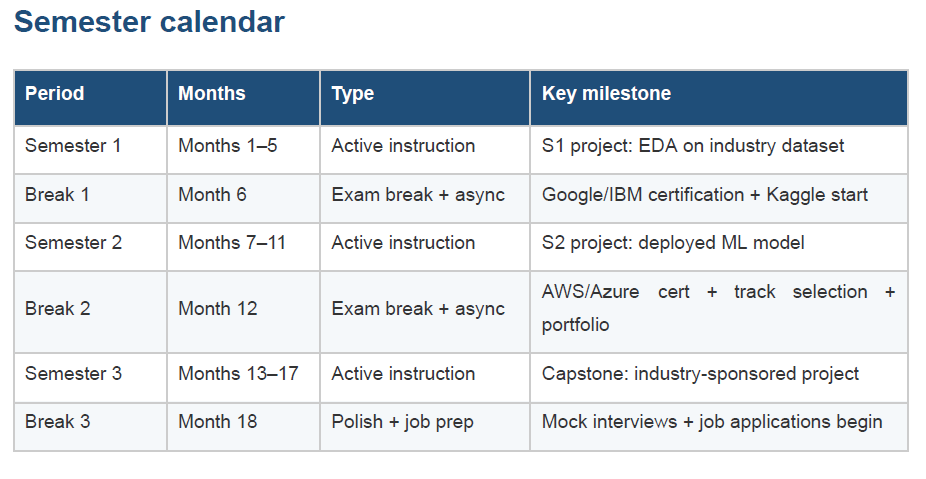
BREAK 1 | Month 6 | Exam break — structured async activities
No live sessions during break periods. Students are expected to complete structured async activities that build on semester 1 and prepare for semester 2. These are tracked and reviewed at the start of semester 2.
- Complete Google Data Analytics Professional Certificate (Coursera) or IBM Data Science Professional Certificate — at minimum the first 3 courses
- Submit at least 1 Kaggle competition entry or notebook (any public competition)
- Polish semester 1 project based on coordinator feedback — update GitHub repository
- Read and summarize 2 industry articles on data trends in Nepal or global markets
SEMESTER 2 | Months 7–11 | Machine Learning & Analytics
Semester 2 introduces machine learning — the skill set that separates data-aware professionals from true practitioners. Every ML concept is introduced through a business problem first, then the algorithm, then the implementation. Students will also begin working with cloud deployment and basic MLOps.
-
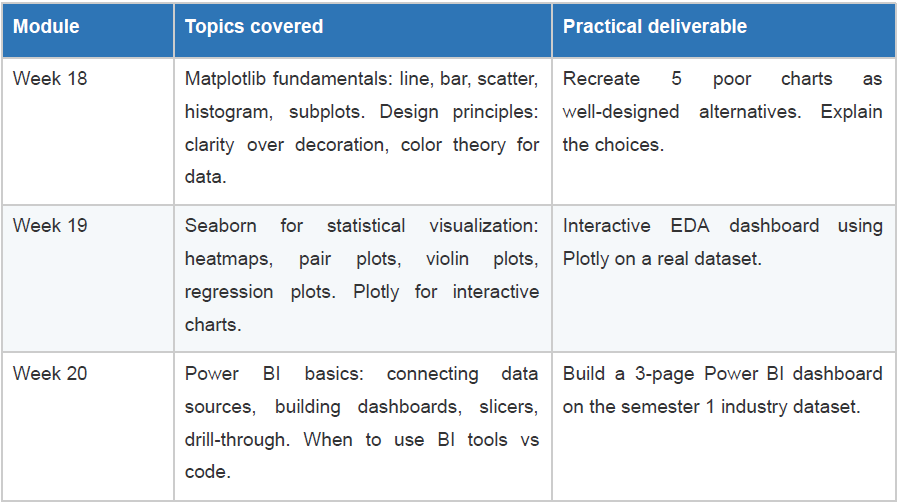
Module 5 — Data visualization & storytelling
(Duration: 3 weeks | Instructor: BI developer or data visualization specialist)
-
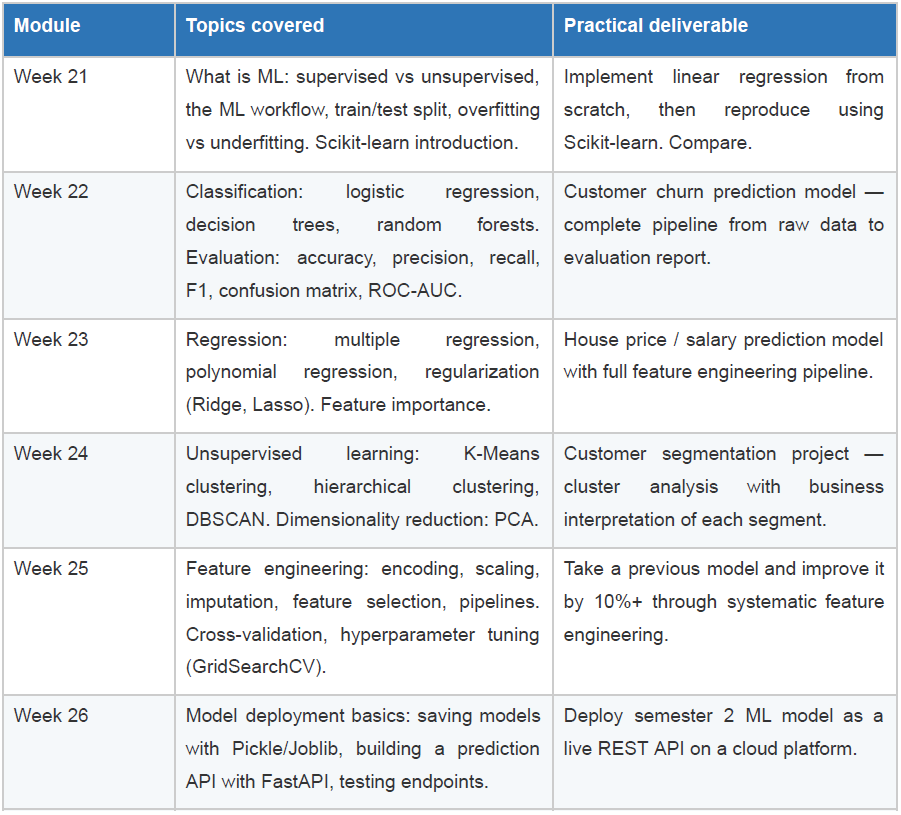
Module 6 — Machine learning foundations
(Duration: 6 weeks | Instructor: Practicing ML engineer or senior data scientist)
-
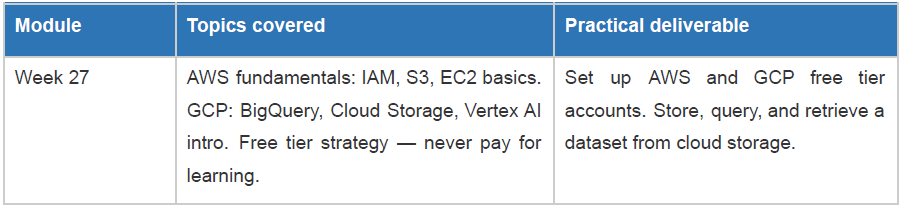
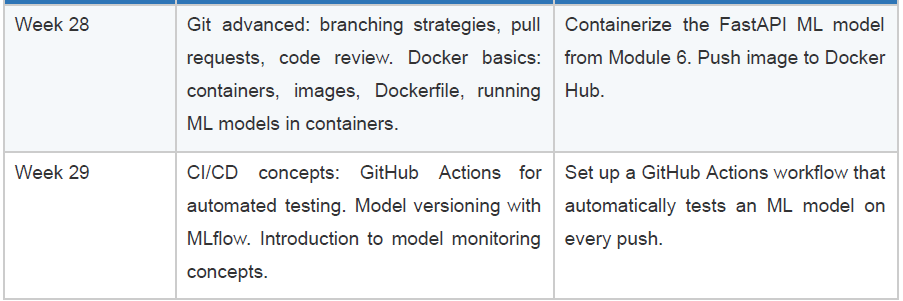
Module 7 — Cloud & MLOps fundamentals
(Duration: 3 weeks | Instructor: Cloud engineer or DevOps practitioner with ML experience)
-
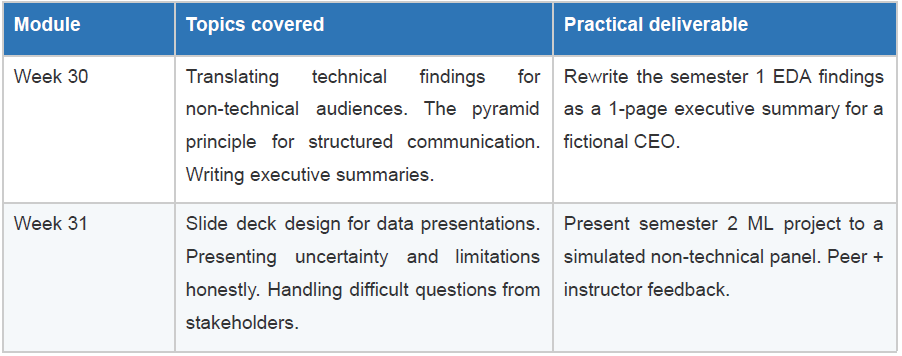
Module 8 — Business communication for data professionals
(Duration: 2 weeks | Instructor: Program coordinator or senior professional with stakeholder communication experience)
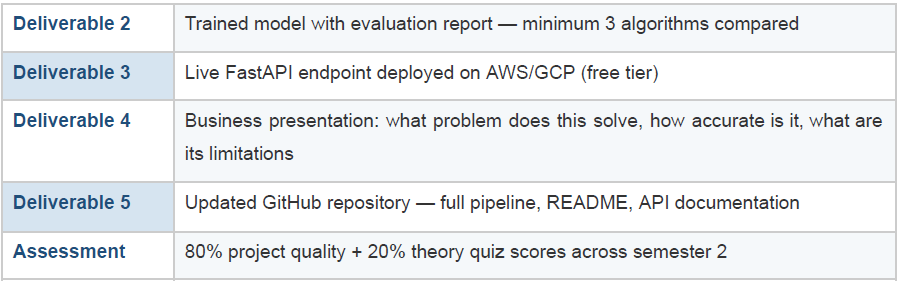
Semester 2 project

BREAK 2 | Month 12 | Track selection + certification
- Complete AWS Cloud Practitioner (free prep available) or Microsoft Azure Fundamentals (AZ-900)
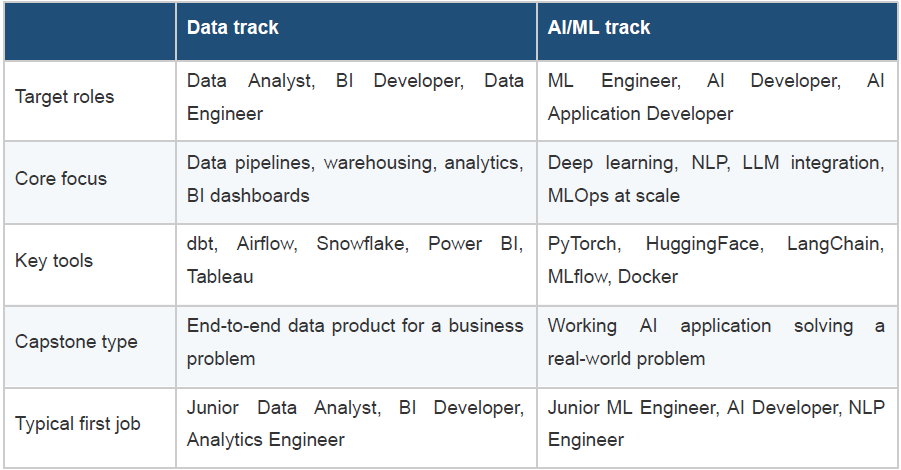
- Submit track selection form — Data Track or AI/ML Track — with a 200-word statement of intent
- Finalize GitHub portfolio: both S1 and S2 projects fully polished and documented
- LinkedIn profile setup and optimization — program coordinator reviews and provides feedback
- Attempt 2 Kaggle competitions or contribute to 1 open-source data project